
Keeping legacy authentic while unlocking new audiences (and royalties)
Why it matters
Catalogue marketing isn’t just “post it again.” It’s the work of re-introducing songs with the context that made them matter in the first place—so new audiences can find them, and existing fans can re-connect. Done well, storytelling can revive demand, open up new licensing conversations, and protect an artist’s legacy from becoming clickbait.
What the Downtown “IN FOCUS” episode gets right
Watch the full series: Downtown Music’s IN FOCUS playlist on YouTube brings the broader conversation to life across episodes.
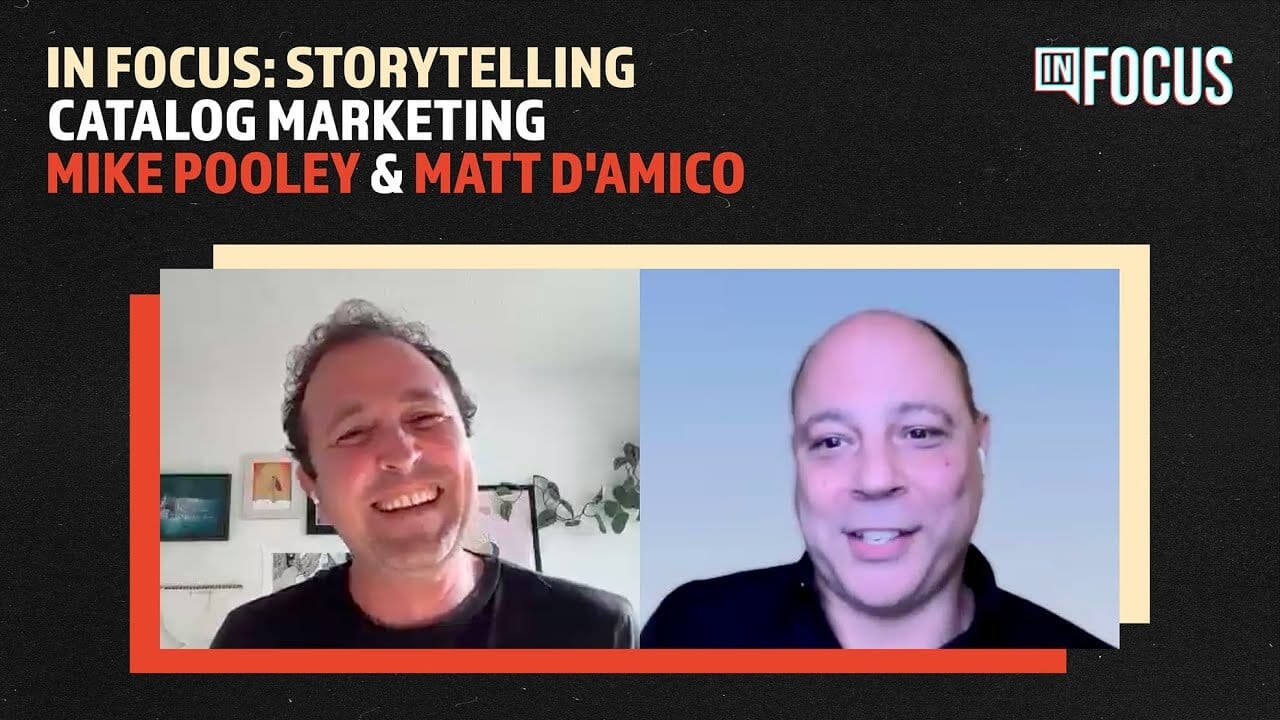
In Episode Four of Downtown’s IN FOCUS series, Matthew D’Amico (FUGA) speaks with Mike Pooley (Mountain Apple Company) about preserving the catalogue of the late Hawaiian artist Israel Kamakawiwoʻole in a digital-first world. The through-line: keep the story true, then meet the audience where they are—see Downtown’s “IN FOCUS: Storytelling – Catalog Marketing”.
Downtown’s listed takeaways map cleanly to any legacy catalogue:
- Authenticity when the artist is no longer with us (protect the voice and values).
- Re-imagining limited archive material for modern platforms—without being exploitative.
- Cultural context matters (why the song mattered then, and why it matters now).
- Use the iconic track as an entry point to the wider body of work.
- Audience insights and global data to identify new markets and trigger discovery (per Downtown’s IN FOCUS episode notes).
The strategy behind the storytelling
Think of catalogue storytelling as three layers that stack:
-
Narrative (the “why”)
- The artist’s origin story, era, collaborators, and community impact.
- Clear boundaries: what’s sacred, what’s remixable, what’s off-limits.
-
Context (the “where it fits”)
- Cultural meaning, language, genre roots, and the moments the song has lived through.
- The simplest win: build short, accurate “scene descriptions” (mood + energy + keywords) that match how fans and music buyers search.
-
Audience insight (the “who + how”)
- Where discovery is happening now (short-form video, playlists, diaspora communities, TV/film).
- What the data is saying: which territories are streaming, searching, and sharing.
When those layers are consistent, you don’t have to over-post. You can release fewer, better stories that travel.
Catalogue opportunity + regional case
For African catalogues, storytelling is often the bridge between local legacy and global discovery.
Hypothetical regional case (illustrative):
- A late artist’s catalogue in SA (e.g., mbaqanga, kwaito, maskandi, jazz, gospel) may have limited visual archive and fragmented metadata.
- A respectful “re-launch” isn’t a rebrand. It’s a context drop: liner-note style posts, short interviews with collaborators (approved), and a clean set of searchable themes (language, region, instruments, era, cultural moments).
- Use the best-known track as the entry point, then guide fans into the deeper cuts—because catalogue value often sits in the body of work, not just the headline song.
If you’re aiming for sync and other licensing, your storytelling also needs to be buyer-readable: mood, tempo, language, clean versions, instrumentation, cultural reference points, and any approvals or restrictions. For a South Africa-specific explainer, see Music In Africa’s guide to sync licences.
Where storytelling meets royalties
Storytelling doesn’t generate royalties by itself—it helps create demand and reduces friction.
How it can translate into real revenue pathways:
- More discovery → more usage: new audiences can mean more listens, shares, playlist adds, and re-engagement.
- Better context → better licensing fit: music supervisors and brands don’t just license sound; they license meaning.
- Clearer positioning → stronger negotiating leverage: when legacy and cultural value are documented, the work is less likely to be treated as generic background.
And on the admin side, storytelling often reveals gaps you can fix so demand becomes payable:
- Missing writer/performer credits
- Conflicting splits
- Unlinked identifiers (works vs recordings)
A “respectful exploitation” checklist
Use this when you’re marketing a legacy catalogue—especially where estates and families are involved:
- Consent & governance: who signs off on messaging, images, and cultural references?
- Archive truth: don’t invent history; label reconstructions clearly.
- Cultural care: credit communities and collaborators; avoid tokenism.
- Modern formats, same meaning: adapt the story for today’s platforms without changing what the work stands for.
- Don’t content-farm the legacy: avoid repetitive “anniversary bait” that can erode trust.
- Buyer readiness: clean metadata + deliverables (instrumentals/edits) if you’re pursuing sync.
What Downtown Music Publishing Africa can do here
We’re the publishing plug: we help make catalogues clearable, searchable, and payable—with rights stewardship, licensing pathways, and long-term support.
Sources
- Downtown Music — “IN FOCUS: Storytelling – Catalog Marketing” (1 Dec 2025) (company-stated)
- YouTube — Downtown Music: IN FOCUS playlist (playlist)
- Music In Africa — “Understanding sync licences in South Africa” (24 May 2022, South Africa)
- IFPI — Global Music Report 2025 (released 19 Mar 2025; data covers 2024, global/SSA)


