
The song and the recording are not the same thing
A lot of confusion in music starts with one simple mistake: treating the song and the recording as if they are the same asset.
They are not.
The song is the composition — the melody, lyrics and musical structure. The recording is the master — the specific recorded audio that gets released. That distinction sounds technical until money starts moving. Then it becomes the difference between understanding who owns what, who should register what, and why a song can generate more than one kind of royalty at the same time.
That is where music publishing starts to make practical sense. Publishing sits on the composition side. It is concerned with the people who wrote the song, how those shares are documented, how the work is registered, and how income tied to the composition is collected and administered. In other words, if the release side is about getting the track out, publishing is about making sure the writers behind it do not disappear once the song enters the market.
For African creators, that distinction matters even more because the theory may be global, but the administration is local. The rules are similar across territories. The collection systems, society structures and workflows are not.
Where the confusion really begins
Take a simple example. A producer in Johannesburg builds the beat. A writer adds the topline and lyrics. An artist records the final version and releases it.
From the outside, that may look like one song.
From a rights perspective, it is at least two layers. The released audio has master ownership. The underlying composition has publishing ownership. Depending on who contributed what, the producer may be on the master side, the song side, or both. That is why so many creators run into trouble when they assume a producer is automatically “just master side” or when split conversations happen after release instead of during the session.
A cleaner way to think about it is this: the master follows the recording, while publishing follows the writing.
Once that clicks, a lot of the rest starts to make sense.
What music publishing actually does
In plain English, music publishing is the business of making sure the people who wrote a song are identified, registered, licensed and paid when that composition is used.
That can mean registering works properly, tracking ownership shares, handling administration, helping collect royalties, resolving ownership conflicts, and supporting licensing on the composition side. It is not mysterious legal language. At its most practical, it is a system for making sure the writing does not get lost behind the release.
This is also where creators often mix up terms that sound interchangeable but are not. A PRO usually refers to a performing rights organisation. A CMO is the broader collective management concept many markets use. A publisher controls or exploits publishing rights in the composition. A publishing administrator usually handles the registration, data and collection side without necessarily operating in exactly the same way as a publisher.
For creators, the useful question is not which term sounds more official. It is much simpler: who is registering my works, where are they being registered, and how will I actually see the money and statements?
Where composition money usually comes from
For most beginners, three buckets matter most.
The first is performance income. That is money generated when the composition is publicly performed or communicated to the public, including uses such as radio, TV, live performance contexts and some digital uses.
The second is mechanical income. That is tied to the reproduction or exploitation of the composition in certain formats and uses.
The third is sync income. That is paid when music is licensed with visual media like film, television, advertising or online content. And this is another place where the master-versus-song split matters: using a released recording often means clearing both the composition and the master, not just one of them.
That is why a song can feel successful on the surface — streams are up, content is moving, the release is live — while some of the composition-side income still goes missing in the background because the ownership data was never properly locked.
Why this gets messy so quickly
Across African markets, creators are often working fast: camp sessions, home studios, voice notes, WhatsApp approvals, last-minute exports. The creative process can be fluid. The admin usually is not.
That gap is where the trouble starts.
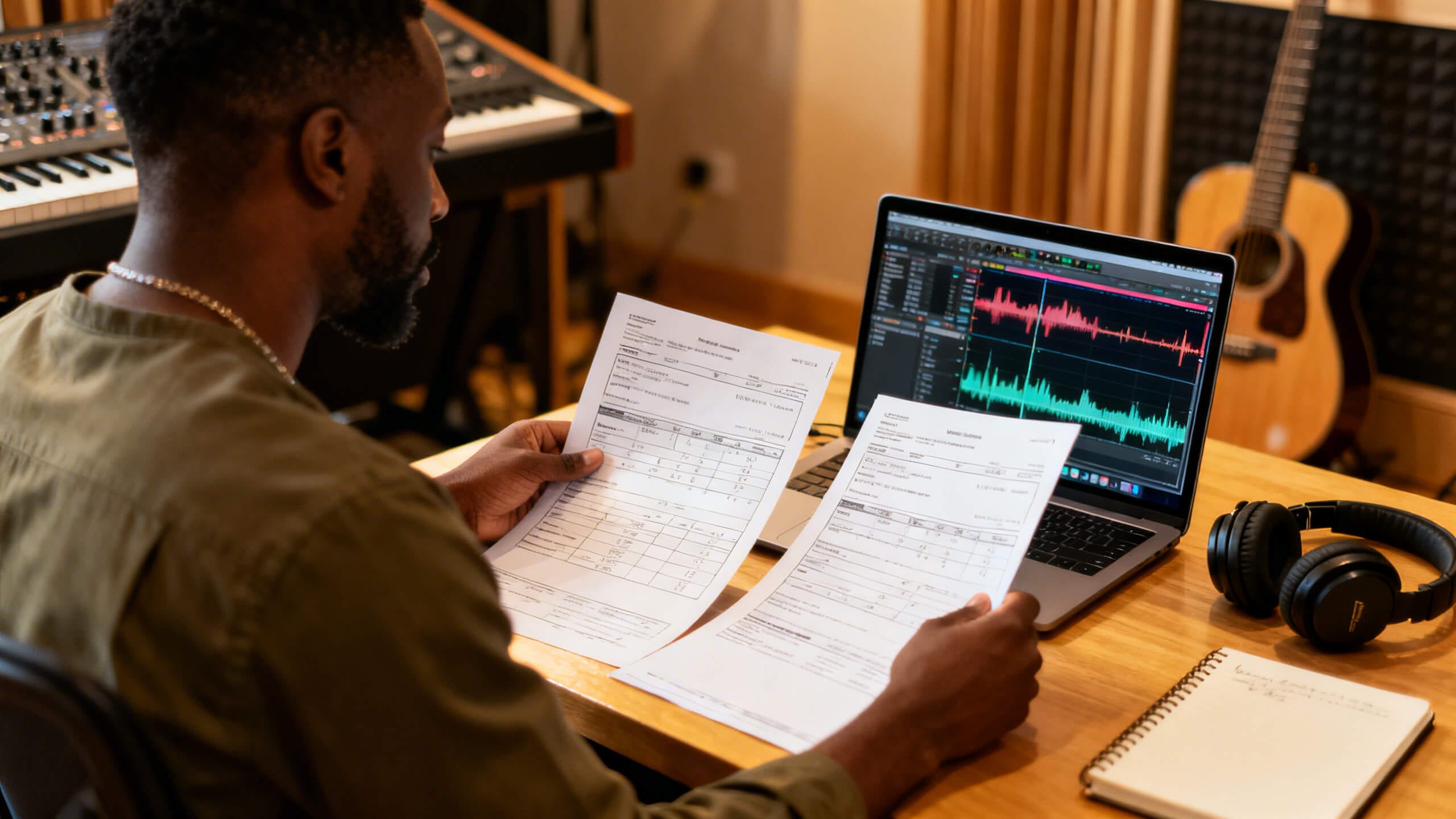
A split sheet can feel like boring paperwork until there is a dispute. Then it becomes one of the most important documents in the room. It is simply the written record of who wrote what and what percentage each person owns in the composition. But that simple piece of paperwork does a lot of heavy lifting. It can help stop arguments before they start, keep registrations aligned, and reduce the kind of metadata mismatches that delay or withhold royalties.
The same applies to writer names, alternate titles, ISRC-linked recording details, contributor lists and any agreement that affects ownership or administration. Too often, the song is finished and released while the composition data is still incomplete, contradictory, or buried in somebody’s notes app. By the time the back end starts wobbling, the momentum around the release has already moved on.
For writers, producers and managers, that is not a small admin error. It is a revenue problem.
The local systems matter
One reason publishing can feel especially confusing for African creators is that the broad concepts travel across borders, but the collection structures do not look identical in every market.
In South Africa, for example, beginners will often hear SAMRO in relation to performing rights and CAPASSO in relation to mechanical rights on the composition side. In other markets, the names and mandates differ. The principle does not. You need to know which local organisation handles which right, whether you are actually registered, and whether your work data is clean enough to be collected against.
That local knowledge matters just as much as the general publishing theory. There is little value in understanding the phrase “music publishing” in the abstract if you do not know how your own market’s collection and registration structure works in practice.
What managers should check before release
The easiest way to cut through the fog is to ask a few hard questions before the song goes live.
- Who wrote the composition?
- What are the final agreed splits?
- Has the work been registered, or at least prepared for registration?
- Who controls the master?
- Who is handling publishing administration, if anyone?
If any of those answers are vague, the release may still move. But the back end will already be unstable.
That is why publishing administration matters. Not because it sounds impressive, but because it closes the gap between “we made the song” and “the right people got paid for the song”. Done properly, it is not glamorous. It is part of the infrastructure that keeps a catalogue working.
The simplest takeaway
For creators who still feel overwhelmed by the terminology, the cleanest place to start is with one line:
Master rights = the recording.
Song rights = the composition.
Everything else follows from there.
Once you know which side you are dealing with, the next steps become clearer. Confirm who wrote. Lock the splits early. Keep the paperwork clean. Register the work properly. Learn which societies handle which rights in your territory. Make sure somebody is actually administering the publishing side rather than assuming it will sort itself out later.
That is how writers, producers and managers stop leaving composition income on the table.
Start with the songs you already released
The most useful next move is not theoretical. It is practical.
Pull together your released songs, split sheets, writer information, PRO or CMO memberships, and any statements you already have. Then check what is registered, what is missing, and what does not match. That kind of catalogue audit can tell you more about your publishing position than another month of vague industry jargon ever will.
Credits
- DIY Musician — Explained: What Is Music Publishing?
- WIPO — Intellectual Property and Music
- WIPO — Creating Value from Music: the Rights that Make it Possible
- CISAC — Collective Management
- SAMRO — Music Creator
- SAMRO — Distribution Categories
- CAPASSO — Capasso 101
- Music In Africa — What You Should Know About Split Sheets
- Music In Africa — The Importance of Music Metadata and Radio Monitoring
- MPASA — Split Sheets


