
Why Africa–diaspora collabs matter (beyond the feature verse)
Africa-to-diaspora collaborations are cross-border partnerships: they move sound and audiences — and they also move rights data across different territories, societies, identifiers, and admin timelines.
Below are 10 collabs (as case studies), followed by a practical Collab Agreement Lite and a checklist to keep splits and registrations tight across borders.
The 10 collaborations (as cross-border case studies)
How to read these: Local→global pathway + a quick “why it travels” insight + the one admin move that reduces disputes and royalty delays.
Crediting note: The 10 selections are adapted from the OkayAfrica list credited in Sources. The “why it travels” lines are our editorial take.
-
Miriam Makeba & Harry Belafonte — “Malaika”
- Pathway: Southern Africa → US/global stages → long-tail catalogue impact.
- Why it travels: Cultural authority + shared repertoire = a record that feels “global” without sanding down its roots.
- Admin move: If it’s a folk standard/traditional work, confirm public domain vs arrangement and document who owns the arrangement share.
-
D’banj — “Mr Endowed [Remix]” feat. Snoop Dogg
- Pathway: Lagos pop heat → US rap co-sign → wider crossover visibility.
- Why it travels: The remix isn’t cosmetic — it’s rebuilt to welcome a new audience, while still feeling like the original world.
- Admin move: Treat remixes like new sessions: update the writer list, re-confirm splits, and flag any new samples/interpolations.
-
Drake — “One Dance” feat. Wizkid & Kyla
- Pathway: Afrobeats influence → global pop centre → feeds back into Africa as a reference record.
- Why it travels: A familiar pop structure with a clear rhythmic identity — plus features that signal the sound is central, not “extra”.
- Admin move: Collect every writer’s PRO/CMO + IPI/CAE early — registrations break when names/identifiers don’t match.
-
Diamond Platnumz — “Marry You” feat. Ne-Yo
- Pathway: Tanzania → US R&B familiarity → pop crossover lanes.
- Why it travels: Star-to-star chemistry with a clean pop frame — recognisable enough for new listeners, specific enough to stay true.
- Admin move: Write down two separate deal lines: composition splits (song) vs master splits/ownership (recording). Don’t merge them.
-
Skepta & Wizkid — “Bad Energy (Stay Far Away)”
- Pathway: London rap circuits ↔ Lagos pop power → shared bridge-market momentum.
- Why it travels: It’s built for the overlap: rap cool + hook-driven melody + production that lives comfortably in both playlist ecosystems.
- Admin move: Lock credits + spelling (legal names + stage names) while the session files are still fresh.
-
Beyoncé, Wizkid, SAINt JHN & Blue Ivy — “Brown Skin Girl”
- Pathway: Global pop platform → African collaborators centred → worldwide cultural moment.
- Why it travels: Big-platform visibility + an anthem-like message + credible collaborators — the impact is huge, and the admin needs to be equally disciplined.
- Admin move: Add an approvals clause: who can approve licensing/sync requests (composition + master), and how fast.
-
Dave — “Location” feat. Burna Boy
- Pathway: UK rap mainstream → Africa-led global star → diaspora youth culture accelerator.
- Why it travels: Storytelling + melody: the record works as a rap single and as an Afrobeats-adjacent hit, so it spreads across scenes.
- Admin move: Register quickly, then sanity-check that the work isn’t stuck as unmatched/pending (usually a metadata mismatch).
-
Tyla, Gunna & Skillibeng — “Jump”
- Pathway: Johannesburg pop → Atlanta rap → Kingston dancehall → club/global rotation.
- Why it travels: Three-scene fusion done clean — the club logic is obvious, which is exactly why the metadata must be equally clean.
- Admin move: Create one “source-of-truth” sheet: writers, splits, publishers/admins, contacts, ISRC (recording), and later ISWC (composition).
-
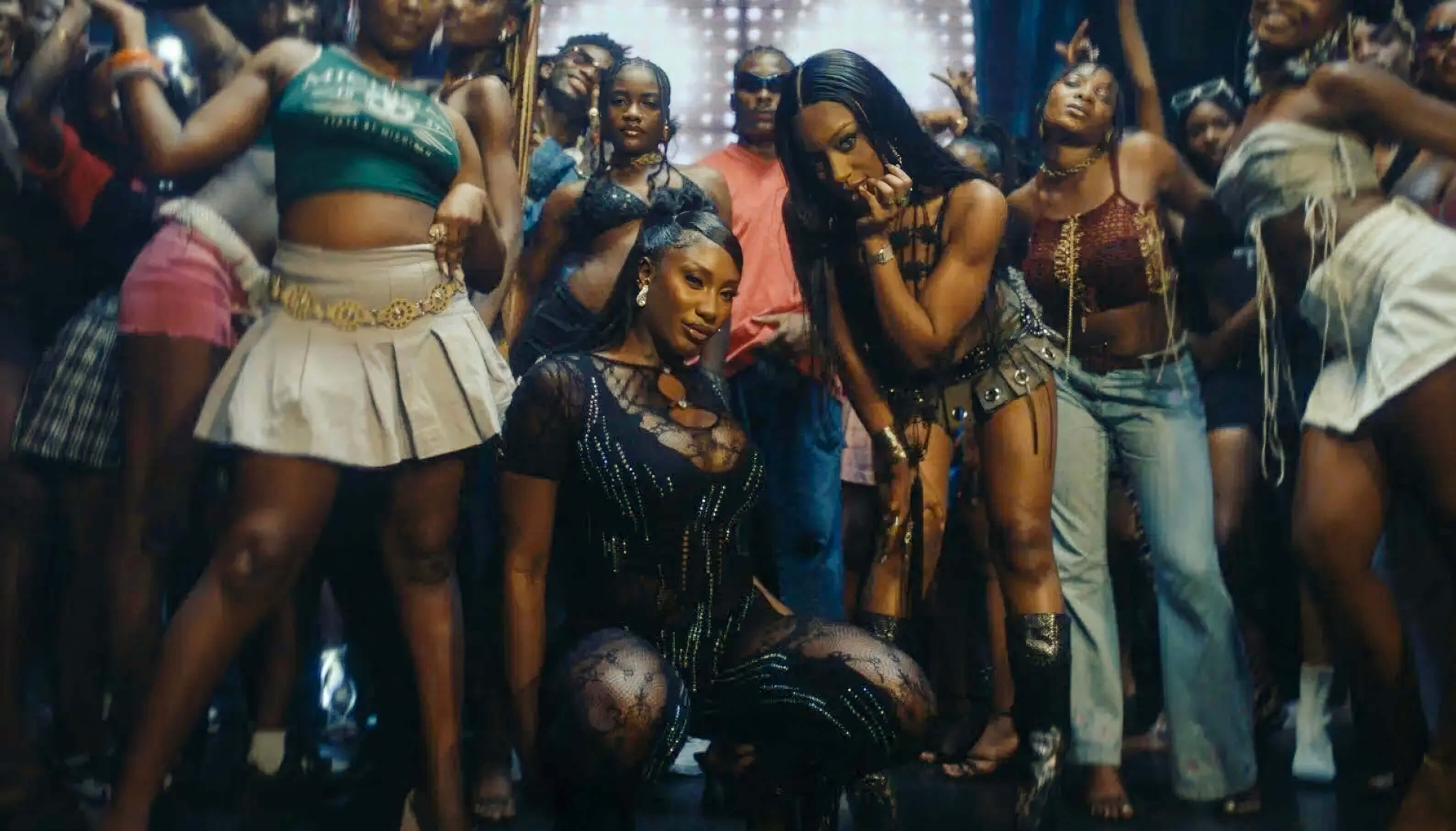
Aya Nakamura — “Hypé” feat. Ayra Starr
- Pathway: Francophone diaspora Europe ↔ West Africa pop → Europe-first momentum with global spillover.
- Why it travels: Two strong vocal identities meeting in the middle — easy entry for European radio/streaming, plus a direct line into Afropop audiences.
- Admin move: Keep names consistent across systems: legal name, stage name, diacritics, and title formatting (DSPs, PROs, press).
-
Moliy, Shenseea, Skillibeng & Silent Addy — “Shake it to the Max (Fly) [Remix]”
- Pathway: Ghanaian-American momentum → Jamaican star power → viral culture → global streaming.
- Why it travels: Viral dance momentum turned into cross-market remix strategy — every new version opens a new pocket of audience fast.
- Admin move: Don’t wait for virality to fix splits. Late splits = late registrations = delayed payouts and higher dispute risk.
The repeatable local→global pathway (what these case studies share)
- A bridge market (UK/France/US/Caribbean) that already listens to Africa-led sound.
- A clear collaboration story (not a random feature).
- High-trust creation — and high-friction admin risk once multiple territories are involved.
Collab Agreement Lite (copy/paste this before your next session)
This is not legal advice — it’s a one-page capture tool to reduce disputes and stop registrations from stalling.
A) Track details
- Working title:
- Session date + city (or “remote”):
- Main artist(s):
- Featured artist(s):
- Producer(s):
B) Contributors (composition side)
For each person who contributed (lyrics/melody/topline/arrangement/translation):
- Legal name:
- Stage name:
- Country of residence:
- PRO/CMO + IPI/CAE:
- Publisher/admin (if any) + email:
C) Composition splits (must total 100%)
- Writer 1: __% | Writer 2: __% | Writer 3: __% | etc.
- Notes (optional): who wrote what / agreed split logic.
D) Master recording (separate from the song)
- Master owner (person/entity):
- Master split (if shared):
- Producer points/royalties (if relevant):
E) Samples / interpolations
- Any samples? yes/no
- Any interpolations? yes/no
- Who is responsible for clearance + cost approvals?
F) Approvals + licensing
- Who can approve sync/licensing (composition)?
- Who can approve sync/licensing (master)?
- Response window (e.g., 72 hours where practical):
G) Confirmation
- Signed names + dates (or written confirmation trail saved to the project folder).
Splits + registrations across territories (creator-proof checklist)
- Capture splits early.
- A split sheet is simply a written record of contributors and ownership percentages — and it prevents “we’ll sort it later” disputes.
- Collect the identifiers that make international tracking possible.
- IPI/CAE: identifies writers in PRO/CMO systems.
- ISWC: identifies the composition/work internationally.
- ISRC: identifies the specific recording/version.
- Register the composition through the right channels.
- Writers (or their publishers/admins) typically register their shares with their local PRO/CMO.
- Works data often moves between publishers and societies using standards like CWR (Common Works Registration).
- Keep one metadata “source of truth.”
- Title, writer legal


