
SA-focused guide to royalties blocked by missing metadata
The uncomfortable truth: if it can’t be matched, it can’t be paid
Across South Africa’s rights ecosystem, many payment delays don’t start with “no money” — they start with no match. If a work (composition) can’t be confidently linked to a recording, the right performers, and the correct payee data, royalties can sit unmatched or get kicked back for clarification.
This is a rights-admin guide: practical steps for rights holders and catalogue teams to remove the most common blockers — especially ISRC/ISWC alignment and performer-credit clean-up.
Why metadata is getting stricter (not just “more important”)
Industry systems are improving at validating identifiers and cross-checking party data. For example, CISAC’s ISWC IPI Context Search is designed to help music publishers find verified creator IPI numbers to reduce registration errors and improve ISWC allocation.
Translation: cleaner data moves faster; messy data gets flagged sooner.
Quick glossary (keep this straight)
- ISWC identifies the composition/work (the song as written).
- ISRC identifies the sound recording (the specific master/version).
- IPI identifies interested parties (writers/publishers) inside society databases.
Useful mental model:
- ISWC = the song
- ISRC = the recording
- Royalties flow cleanest when ISWC ↔ ISRC links are accurate, and names/roles match across systems.
SA context: different rights, different registers, same metadata failure points
South African creators and rights holders often interact with multiple organisations and datasets (broadcast, live, digital, neighbouring rights). When information differs between submissions, cue sheets, monitoring reports, and registrations, matching gets harder — and payments slow down.
A practical takeaway: if identifiers and descriptive data don’t line up, tracking and reporting break downstream.
The 7 metadata blockers that most often stall royalties
- ISRC missing or inconsistent across versions (radio edit vs album vs clean).
- ISWC missing (work not properly registered or not retrievable internally).
- Wrong splits (or splits corrected in one place but not mirrored everywhere).
- Name collisions (spelling changes; stage vs legal name; inconsistent punctuation).
- Duplicates (same work/recording registered multiple ways).
- Performer credits incomplete (roles not captured; evidence not stored).
- Assuming one registration fixes all systems (it doesn’t).
“Song passport” checklist (minimum pack per track)
Treat this like finance data: one source of truth, versioned updates, change logs.
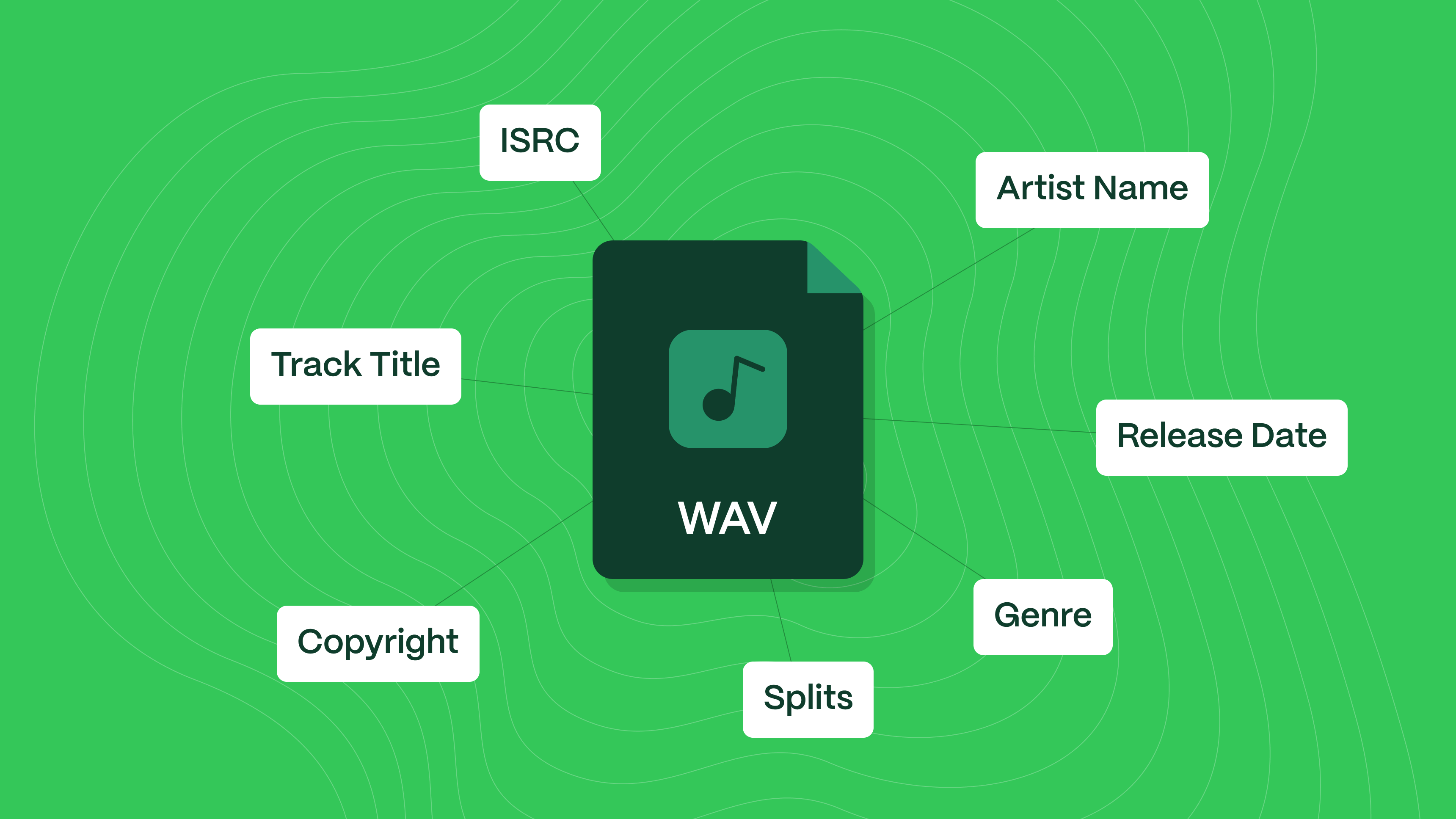
- Work title + alternate titles
- Writer names + IPI numbers (where available)
- Publisher(s) + splits
- ISWC (once allocated)
- Recording title + version notes (radio edit, clean, instrumental, live)
- ISRC per version
- Main artist (exact spelling) + featured artists
- Performer roles (featured/other featured/non-featured) + evidence file (where needed)
- Release date + master owner details (for neighbouring rights workflows)
ISRC/ISWC alignment in a day (not a week)
Goal: every ISRC (recording/version) maps internally to the correct ISWC (work) and correct parties.
1) Build a two-column alignment table
- Column A: ISRC + recording title + version label
- Column B: ISWC + work title + writers + splits reference
2) Resolve conflicts before you submit fixes
- One ISRC matches multiple works → verify writers, alternate titles, creation notes.
- Multiple ISWCs look identical → flag for merge/clarification (don’t guess).
3) Lock the “name layer”
Pick one canonical spelling per contributor and keep it consistent across:
- registrations / claims submissions
- delivery sheets & cue sheets
- internal splits tracking
Performer-credit clean-up (the neighbouring-rights trapdoor)
Neighbouring-rights payments depend heavily on who performed on the recording and how that participation is documented.
If a performer wasn’t properly credited at source, claims can require supporting evidence — turning a simple submission into a documentation exercise.
Practical fix:
- Capture a per-track performer list at session wrap.
- Store a single evidence bundle per track (as available/appropriate).
- Keep roles unambiguous to reduce validations and disputes.
Africa lens: clean local metadata travels better globally
South African works and recordings routinely move across borders through broadcast, licensing, and digital usage. When identifiers, names, roles, and splits are consistent at source, international matching improves — fewer conflicts, cleaner reporting, faster follow-through.
Where Downtown Music Publishing Africa fits
We help rights holders audit, align, and clean work/recording data so registrations and claims can run with fewer conflicts.
One next step
Request a rights-portfolio metadata review: share your catalogue sheet/export and we can highlight likely mismatch risks (ISRC/ISWC gaps, duplicates, and performer-credit issues) so your team knows what to fix first.
Sources
- Music In Africa — “The importance of music metadata and radio monitoring” (24 May 2022, South Africa)
- CISAC — “CISAC launches new ‘ISWC IPI Context Search’…” (1 Dec 2025, global)
- ISWC.org — “ISWC for creators and publishers” (global)
- SAMPRA — “Membership Rules” (PDF; South Africa)
- SAMRO — Official site / member support pages (South Africa)


