
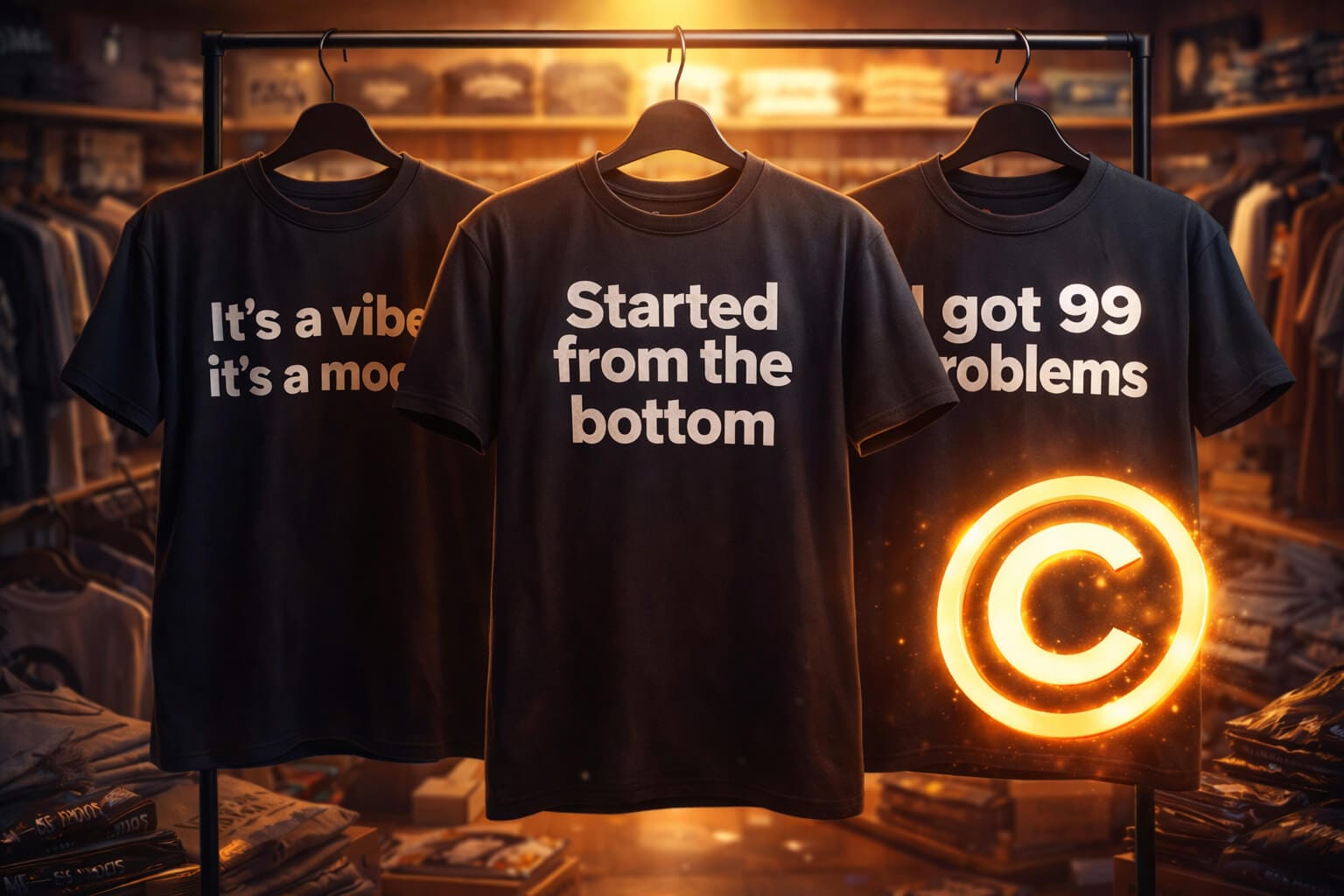
When a lyric leaves the song, the rights conversation changes
A lyric can feel lightweight online: one line in a quote-tweet, a chorus on a graphic, a bar across a hoodie. But once words leave the audio file and travel as text, design or product copy, they move into uses that copyright law still cares about.
For writers, that matters because lyrics are not just vibes or marketing copy. In copyright terms, they form part of the underlying musical work as protected expression. WIPO describes copyright as a cornerstone of the music industry and notes that print rights cover the transcription and distribution of lyrics in both physical and digital formats.
Why quote-tweeting bars is not automatically low-risk
The internet can make short text feel casual. But short is not the same thing as cleared. WIPO’s guidance on quotation makes the point that quotation-style exceptions are narrow: use must be compatible with fair practice, and the extent used cannot exceed what the purpose justifies. That is not a blank cheque for lyric captions, fan edits, promo tiles or brand copy.
That does not mean every lyric post is automatically infringement. It does mean the answer depends on the territory, the purpose, the amount used and the local exception or limitation that applies. WIPO makes this point directly in its music guidance: when lyrics are printed or reproduced, the circumstances allowed by law depend on the applicable limitations and exceptions in the territory where the song is used.
The practical risk in lyric graphics
A lyric graphic is not only text. It is usually text plus design plus distribution. Once a line becomes a visual asset for social, a campaign, a video cut-down or other promotional use, the usage starts to look less like casual conversation and more like a reproducible marketing asset.
That is where creators can get caught on both sides. If you wrote the lyric, you want the line credited, cleared and properly accounted for when someone else turns it into content. If you are reposting or collaborating, you need to know whether you are sharing culture or exploiting protected text in a way that needs permission.
The practical publishing point is simple: when lyrics travel as text and visuals, writers need the same seriousness they would expect for recordings, splits and credits. Rights thinking should not begin only when a sync brief lands.
Merch drops raise the stakes
Merch is where the risk becomes easier to spot. WIPO states plainly that making merchandise with the lyrics of a song could infringe the rights of the author of those lyrics. That matters for artist merch, capsule collections, event drops, brand collaborations and creator-led fashion runs.
The commercial logic is simple. A lyric on a shirt, poster, tote or activation wall is no longer just speech around a song. It is product use. If the lyric writer, publisher or other relevant rights holder has not approved that use, the merch may create exposure for the seller, the collaborator and the team behind the release.
What creators should check before a collab goes live
Before a lyric-led post, merch run or partner activation goes out, check four things.
- First, confirm who controls the song rights tied to the lyric. A popular line may involve multiple writers and publishing interests.
- Second, ask what the use actually is. Editorial commentary, fan conversation, marketing creative and physical merchandise do not carry the same risk profile.
- Third, check territory. Copyright exceptions are not one-size-fits-all, and what feels acceptable in one market may not travel cleanly into another.
- Fourth, separate song rights from recording rights and branding rights. A lyric on merch is not the same permissions question as using a master recording in a post. If names, logos or artwork are involved, more rights may be in play.
The real takeaway
Lyrics are intellectual property, not free-floating copy. Quote-tweets, lyric graphics and merch drops may look small, but they can trigger real permissions questions once the words are reused as text, visuals or products.
For writers, that is not bad news. It is leverage. When lyrics travel, rights should travel with them.
Credits
- WIPO: Intellectual Property and Music
- WIPO: Creative Expression: An Introduction to Copyright and Related Rights for Small and Medium-sized Enterprises
- WIPO: Guide to the Copyright and Related Rights Treaties Administered by WIPO


