
Stop boosting posts. Start building moments.
Marketing doesn’t fail because you didn’t spend enough. It fails when the spend isn’t attached to a story people can repeat — and when the data behind the song is too messy to track the moment you just paid to create.
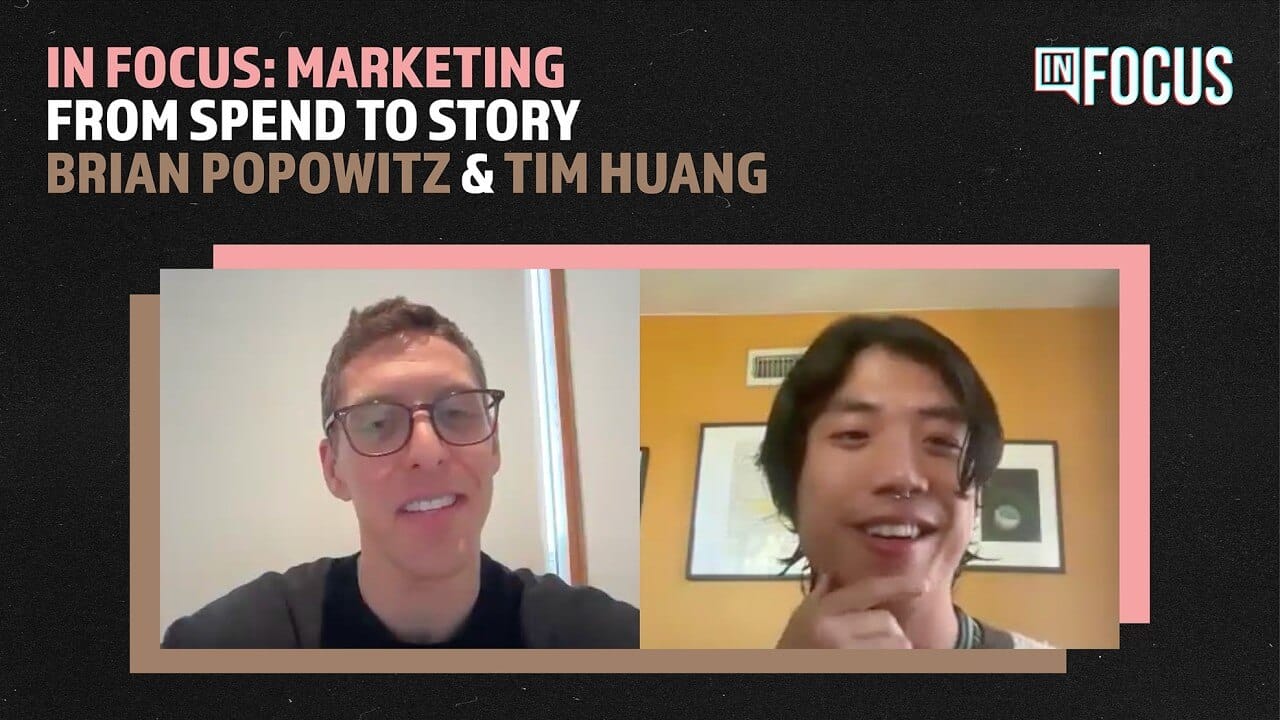
In Episode 11 of Downtown’s IN FOCUS series, Tim Huang (Director of Audience Strategy, Downtown Artist & Label Services) speaks with Brian Popowitz (General Manager, Black Box) about why modern music marketing is shifting away from “more budget” and toward storytelling, intention, and long-term fan development — with paid media working best as an amplifier for what’s already resonating.
What “from spend to story” really means
Story-led marketing turns your release into something fans can understand, repeat, and share — before you ever put money behind it.
Use this framing:
- Spend buys reach.
- Story creates reasons.
- Moments create proof.
A strong campaign is usually a sequence of moments that ladder up to one clear idea (not a random set of posts): a hook clip, a lyric meaning, a real-life scene, a collaborator moment, a live performance, a fan reaction, a behind-the-scenes beat — all pointing to the same “why”.
Key takeaways to steal from the conversation
These are the practical moves that the “spend to story” approach points toward.
1) Start with the audience, not the platform
Instead of asking “What should we post on TikTok?”, ask:
- Who is this for?
- What problem or feeling does the song solve?
- What would make that person care today?
2) Make one clear promise
A campaign converts better when people know what they’re getting:
- a mood (late-night drive)
- a message (break-up clarity)
- a scene (homecoming)
- a culture signal (dance, slang, style)
If you can’t say the promise in one sentence, your ads will struggle.
3) Build an ecosystem of touchpoints
Paid media works best when fans have somewhere to go next:
- a profile that’s updated
- a pinned video
- a link hub that’s correct
- a music video / visualiser
- a live moment / performance clip
- a press mention or playlist feature
The aim is repeated exposure — not one loud post.
4) Test small, then amplify what’s already moving
Don’t guess with big budgets. Watch what your audience is already telling you:
- saves
- shares
- comments that quote lyrics
- watch time
- follows after watching
Then spend to scale that specific piece of creative.
5) Creative often becomes the effective targeting
Platforms can help you reach people — but the creative is what makes them stay.
Make multiple versions of the same story: different hooks, different angles, different lengths.
The royalty blind spot: when marketing works but money doesn’t
A campaign can generate real attention, but if your credits and identifiers are incomplete or inconsistent, the downstream money trail gets harder to match (and that can slow down clean processing).
Common campaign-to-royalties breaks:
- You run ads to a recording, but the ISRC is missing, duplicated, or inconsistent across versions.
- The composition details aren’t aligned (writers/splits), so the ISWC link takes longer.
- Contributor names differ across systems (spelling, aliases, punctuation), making matching messy.
- Multiple versions (clean, explicit, sped up, remix) go out without clear linking.
Story-led marketing gets people to the song. Clean metadata helps the industry systems recognise the song. Both matter.
Africa lens: narrative + data wins when budgets are tight
Across many African markets, creators often have to stretch smaller budgets across multiple platforms and audiences. That makes “spend to story” especially useful:
- Story beats budget when you’re competing against global spend.
- Community channels (WhatsApp groups, campus scenes, local radio/TV, creator collabs) can create momentum that paid media then scales.
- Clean credits early matters when your music travels quickly across borders and re-uploads.
A practical checklist: market smarter (and cleaner)
Use this as your next release workflow.
A) Story (before you spend)
- One story sentence: what is this song about, and who is it for?
- One objective: pre-saves, video views, UGC creation, ticket sales, radio adds.
- 3–5 moments: hook clip, lyric explain, BTS, performance, collaborator content.
- A touchpoint map: where does a fan go after each post?
B) Data (before you scale)
- Confirm versions are labelled consistently (main, clean, explicit, remix).
- Store identifiers in one place (ISRCs) and keep titles consistent.
- Lock writing credits and splits in a single, shared document.
- Use consistent writer/artist naming (avoid switching spellings across platforms).
C) Spend (after you see movement)
- Put budget behind the best-performing creative (based on saves/shares/watch time).
- Keep iterating: same story, new angles.
Sources
- Downtown Music — “IN FOCUS: Marketing – From Spend to Story” (article, 16 Feb 2026)
- Downtown Music (YouTube) — “IN FOCUS: Marketing – From Spend to Story” (video)
- Spotify — IN FOCUS, Ep. 11: “Marketing – From Spend to Story” (16 Feb 2026)
- Apple Podcasts — IN FOCUS (show page)
- CISAC — “CISAC launches ISWC IPI Context Search…” (1 Dec 2025)
- IFPI — ISRC overview (International Standard Recording Code)
- WIPO — The Global Digital Music Landscape (PDF)
- DDEX — Musical Works Data and Rights Communication standards overview


